N95
Date
May 21, 2025
Fields of practice
Packaging, Visual System, Concept Development, Brand Extension
Context
N95 is a conceptual high-end specialty coffee brand developed as a sub-brand of NOMAD Coffee. The project explores how packaging design can translate specialty coffee culture, traceability, sensory complexity, and craftsmanship into a clear, contemporary retail experience.
The Challenge
The challenge was to create a packaging system that could communicate premium quality and technical rigor without relying on ornamental or traditional coffee aesthetics. The identity needed to feel modern, minimal, and informative while remaining approachable and scalable across multiple coffee varieties.
Objective
To design a coherent packaging system capable of organizing multiple coffee profiles while reinforcing origin, flavor, and preparation method.
The project aimed to balance functional clarity with a strong visual identity aligned with NOMAD’s contemporary positioning.
Research & Insights
Research focused on specialty coffee culture, consumer behavior, and industry standards, including the Specialty Coffee Association (SCA) flavor wheel. Insights highlighted growing interest in transparency, origin, and sensory education, particularly among consumers seeking more intentional, informed coffee experiences.
Design Strategy
The strategy positioned N95 as a precise and technical extension of NOMAD Coffee. A minimalist visual language was used to emphasize the information hierarchy, while color served as a functional tool to differentiate flavor profiles and guide user expectations.
Visual System
The visual system is built on a black-and-white base, consistent with NOMAD’s bicromatic identity. A single accent color is assigned to each coffee profile, derived fromthe SCA flavor wheel, creating a structured and intuitive system. Typography is clean and contemporary, reinforcing clarity and legibility across formats.
Packaging Structure
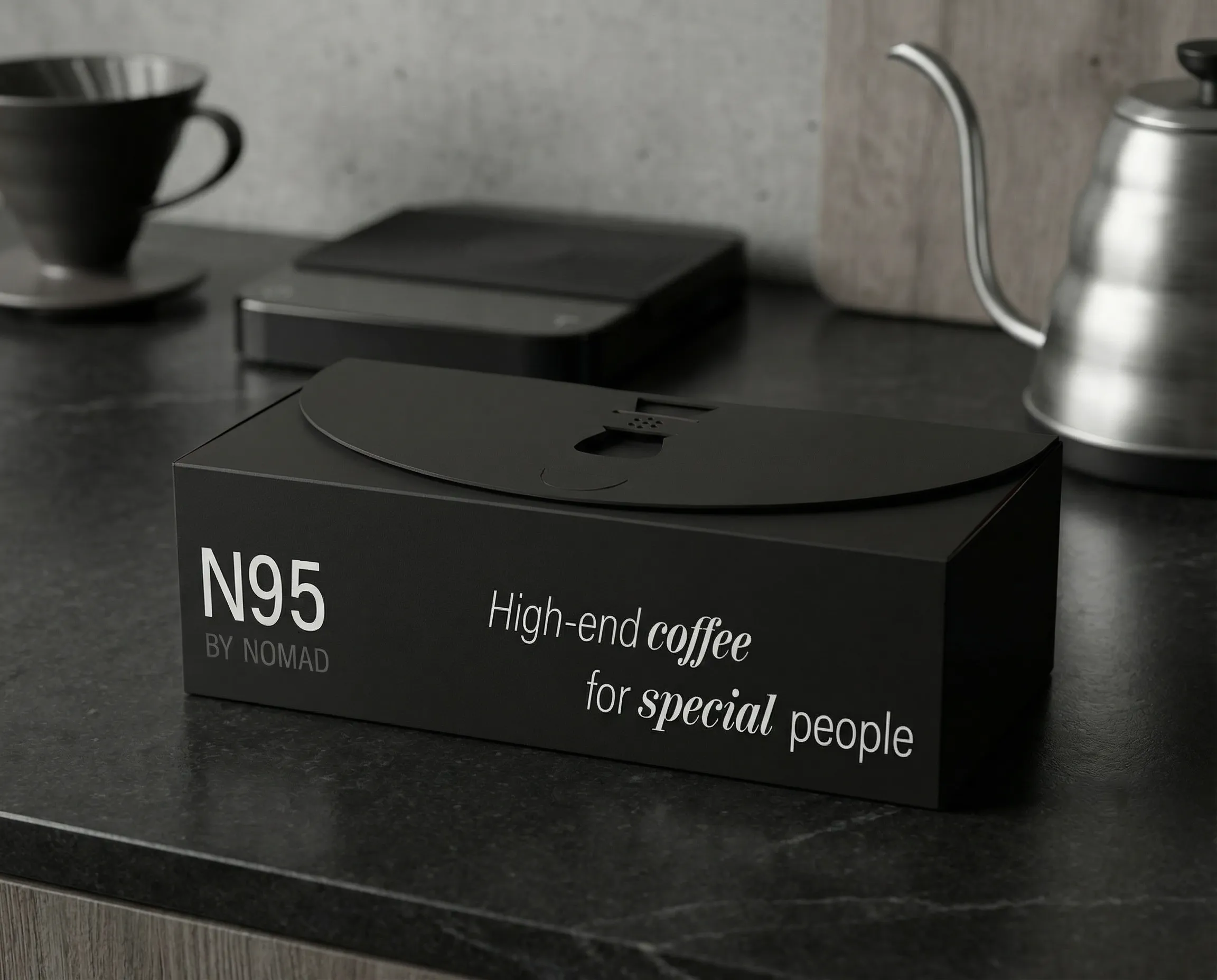
The packaging incorporates a die-cut silhouette inspired by a manual filter coffee maker, merging symbolic recognition with functional guidance. Both individual and collectivecontainers were designed to support retail presentation, storage, and transport while maintaining visual consistency.
Applications
The system was applied across individual coffee boxes, a collective container, and label variations for different flavor categories. Mockups demonstrate how the system adapts across formats while preserving hierarchy, coherence, and brand recognition.
Outcome
The resulting packaging system positions N95 as a refined, educational, and premium coffee experience. It successfully translates complex sensory information into an accessible visual language, reinforcing trust and clarity at the point of sale.
Reflection
This project strengthened an approach to packaging design rooted in structure, restraint, and meaning. It highlighted the importance of using design systems not only for aesthetics but also as tools for communicating knowledge and enhancing the user experience.