SENSE
Date
September 30, 2023
Fields of practice
Brand Strategy, UX/UI, Digital Ecosystem, Spatial & Retail Concepts
Context
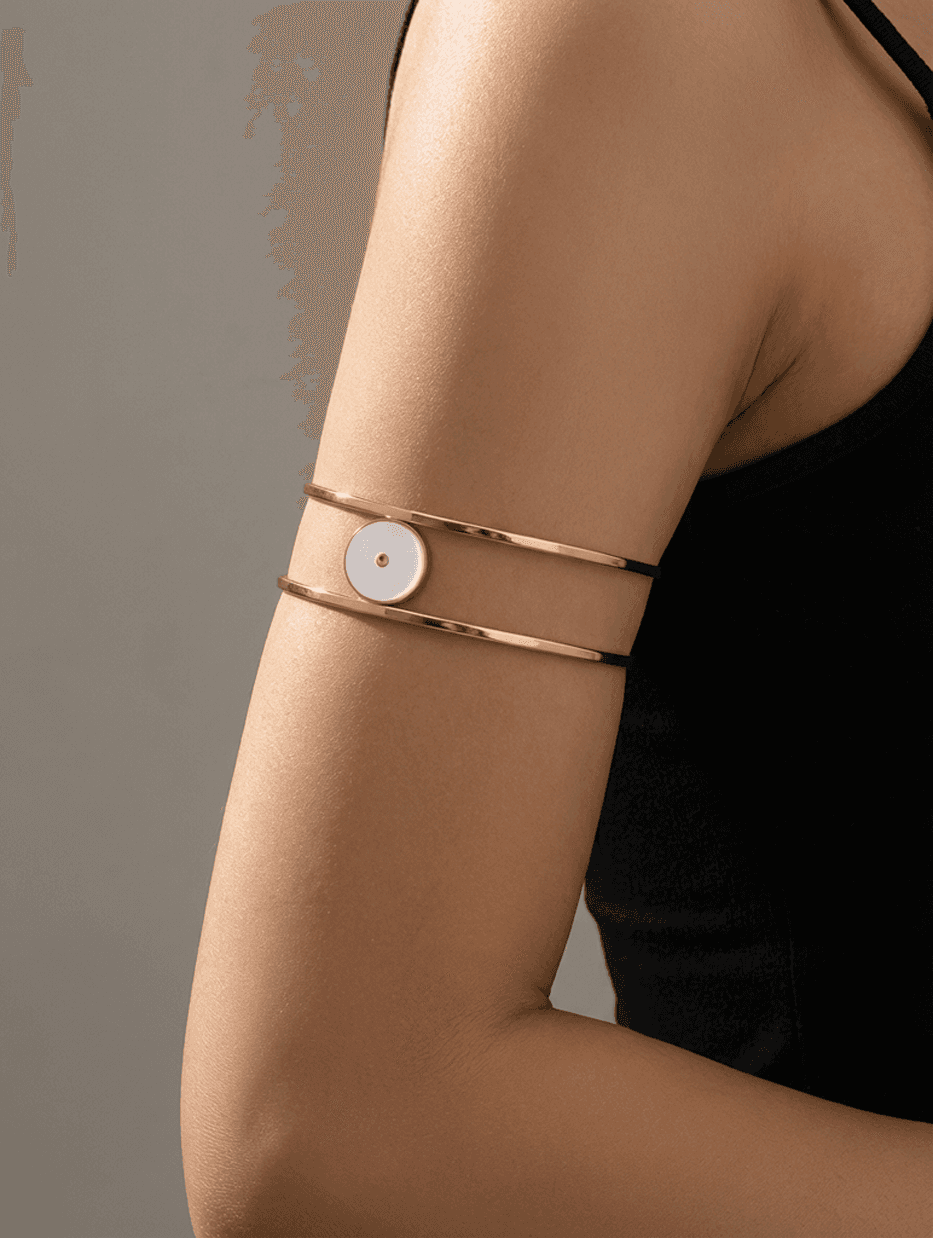
SENSE is a brand created to reframe the experience of people living with diabetes. The project focuses on a bracelet-like accessory that protects and visually integrates glucose sensors into everyday life, shifting them from medical devices to intentional personal objects. Through a contemporary metallic aesthetic aligned with fashion culture, visibility becomes a form of empowerment rather than concealment. Beyond functionality, SENSE addresses the emotional dimension of diabetes, using design to reduce insecurity and transform necessity into self-expression. The product is positioned as a fashion-forward accessory rather than a medical aid, designed for a generation that values aesthetics, personalization, and visibility as part of identity.
The Challenge
People living with diabetes often experience stigma and emotional distance from the medical tools they rely on daily. The challenge was to design a brand system that normalizes visibility while maintaining functionality, emotional sensitivity, and aesthetic credibility.
Objective
To create a human-centered brand ecosystem that combines functionality, aesthetics, and emotional value. The project aimed to design a coherent system spanning product, digital experience, and physical touchpoints, positioning SENSE at the intersection of health, fashion, and contemporary culture.
Research & Insights
Research identified Gen Z and Millennial users living with diabetes as the core audience—individuals with strong ties to fashion, accessories, and contemporary aesthetics. Insights revealed expectations centered on resistance, comfort, quality, and visual coherence. The absence of comparable products in the market highlighted an opportunity to introduce variety and personalization within a traditionally utilitarian category.
Design Strategy
SENSE was positioned as an empowering lifestyle brand rather than a medical one. The strategy extends beyond digital interfaces into physical space, using circular forms and modular systems inspired by the bracelet itself. Variations in height and flow reference glucose level fluctuations, translating an invisible condition into an abstract, navigable experience.
Visual System
The visual identity is built on a restrained palette, contemporary typography, and tactile materials. Photography emphasizes real use cases and everyday contexts, reinforcing normality and confidence rather than clinical distance.
Applications
The system was applied across product design, packaging, digital interfaces, retail concepts, and brand communication. Each touchpoint reinforces coherence while allowing flexibility across contexts.
Outcome
The resulting brand ecosystem reframes diabetes management as part of a contemporary lifestyle. SENSE demonstrates how design can reduce stigma, build trust, and create meaningful emotional connections. Reflection: This project strengthened a human-centered approach to branding and system design, highlighting the importance of empathy, symbolism, and coherence across digital and physical environments.